Southampton, New York
Southampton Commercial Real Estate
Southampton Village includes Job's Lane, Main Street, and the surrounding blocks carry trophy retail, licensed hospitality, professional office, and mixed-use property serving local and seasonal demand. North Fork Commercial advises Southampton owners and acquirers with underwriting-grade valuation and a confidential, off-market-first process.
- Main Street
- Jobs Lane
- Hampton Road
- County Road 39
- Water Mill
Market
Southampton Village
Credential
CCIM · MBA
Posture
Confidential
Southampton Market Overview
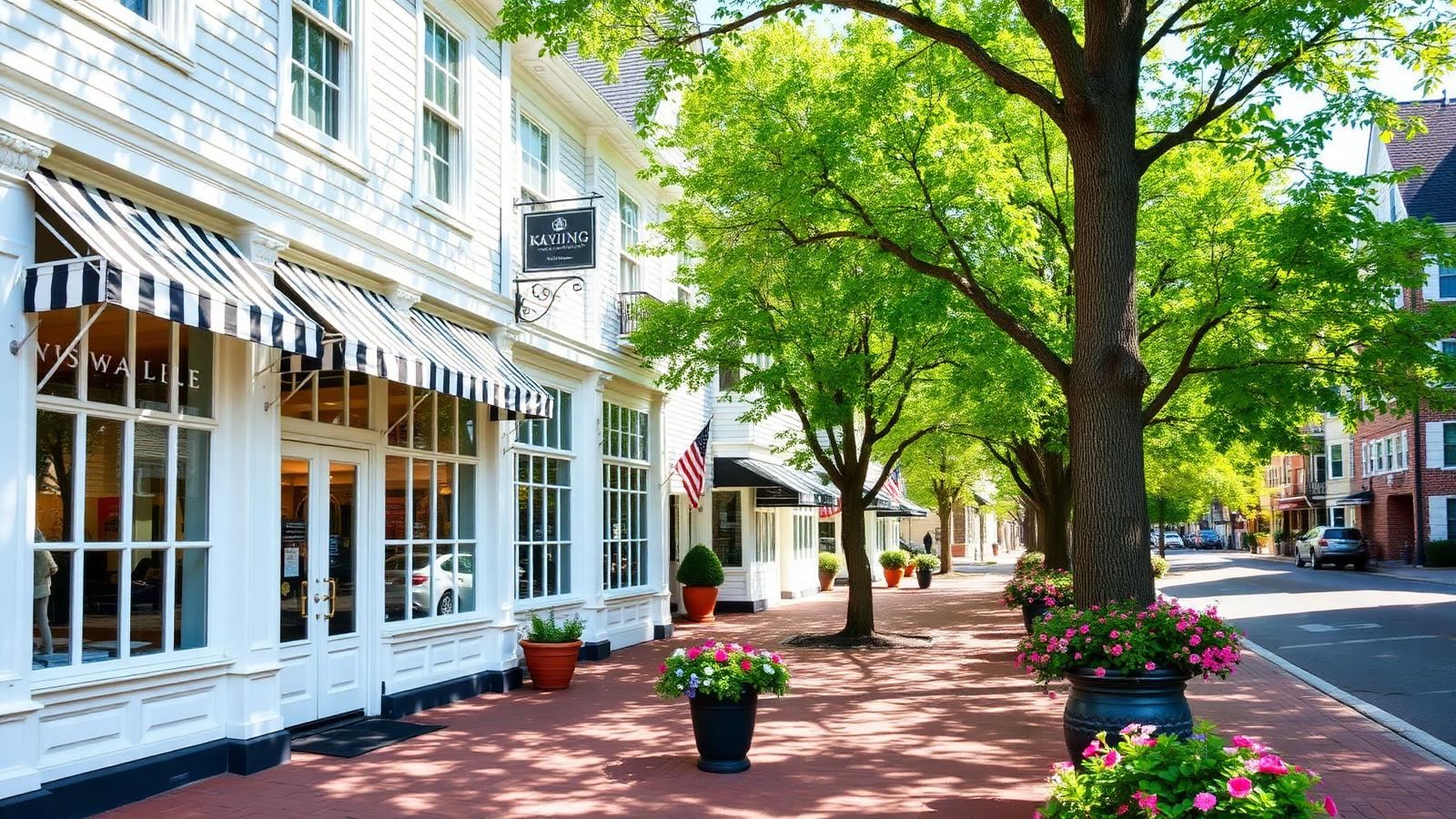
Southampton is the first Hamptons village travelers reach and the one with the deepest professional base. Main Street and Jobs Lane carry the luxury retail and restaurant inventory, Hampton Road and Windmill Lane hold medical, professional office, and service uses, and the County Road 39 corridor absorbs the larger-format, automotive, and contractor demand that village zoning excludes. The result is a commercial market with both a trophy tier and a working tier.
Village oversight is substantial. Architectural Review Board and historic-district review, strict signage and facade standards, parking requirements, and a limited change-of-use path mean the entitlement question often outweighs the price question. A buyer intending to convert retail to food service, or office to medical, needs that answer before contract rather than after.
Ownership is a mix of long-held family real estate and investor capital, and Southampton's year-round population is larger than most East End villages, which lengthens the trading season and supports professional and medical tenancy through the winter. That relative stability is why Southampton income assets underwrite tighter than comparable Montauk or Greenport product.
- Trophy Retail
- Main Street & Jobs Lane
- Service Corridor
- County Road 39 / Hampton Road
- Review
- Village ARB, historic district, parking
- Stability
- Largest year-round Hamptons village base
What Trades in Southampton
Southampton commercial inventory divides into three zones. The village core around Job's Lane and Main Street is dominated by high-basis retail, mixed-use, licensed restaurants, and boutique hospitality. Highway commercial along County Road 39 carries service retail, auto, medical office, and light industrial uses with better parking and access. The immediate surrounding corridors include estate-zone parcels where commercial entitlement is itself the value driver.
Because village supply is fixed and seasonal revenue is intense, Southampton assets underwrite more like scarce trophy positions than yield plays. Cap-rate screens understate value for well-located, credit-tenanted properties and overstate it for assets with short seasons or rollover exposure.
Zoning, Historic Review, and Seasonal Reality
Southampton Village zoning, architectural review, and historic-district oversight shape what can be built, renovated, or converted. Suffolk County Department of Health septic density limits restaurant seats and hotel keys. FEMA flood exposure affects waterfront-adjacent parcels. Parking requirements and seasonal traffic patterns constrain intensification.
We identify these constraints during valuation so buyers do not discover them during diligence and sellers do not price against uses the village will not permit.
Confidential Representation in Southampton
Southampton ownership is often entity-held, multigenerational, or tied to family offices where publicity is unwelcome. Our default process is confidential: a curated, financially qualified buyer set, controlled release of financials, and coordination with zoning counsel, lenders, and tax advisors to preserve closing certainty.
What Drives Southampton Commercial Value
Southampton value is corridor-specific. Main Street and Jobs Lane carry the village's highest rents, where frontage width, storefront depth, and proximity to the strongest anchors matter more than total square footage. Hampton Road and County Road 39 support service, automotive, medical, and larger-format uses where parking count and vehicle access govern. Water Mill and the surrounding hamlets add mixed-use and land with a different zoning and review path entirely.
Income needs to be normalized before it can be trusted. Seasonal leases, percentage rent, summer subleases, and shoulder-season vacancy are standard features of Southampton retail rather than warning signs, but annualizing peak-season performance overstates NOI and misleads lenders underwriting from outside the region. We rebuild the rent roll on a normalized basis, stress-test winter coverage, and document tenant credit and lease structure so a buyer's diligence confirms the number rather than disputing it.
Approvals are the other half of the valuation. Village architectural review, Southampton Town zoning, Suffolk County septic density, and parking requirements collectively cap seating, keys, and upper-floor residential conversion. A building priced on optimistic intensification — more restaurant seats, added apartments, a larger footprint — is priced on an outcome that may not be permitted. We establish the achievable use first and price to that.
Local Property Insights for Southampton Owners
Southampton's commercial value is concentrated in a small number of blocks and governed by a dense set of approvals. Main Street and Jobs Lane sit inside the incorporated Village, where architectural review, signage rules, and parking requirements limit how a building can be intensified, and where a change of use — retail to food service in particular — triggers both a parking analysis and a sanitary review. Along County Road 39 and toward Water Mill, the constraint shifts to curb cuts, highway access, and seasonal traffic that alters how a site actually performs by month.
Land economics drive more Southampton trades than income does. The Peconic Bay Region Community Preservation Fund transfer tax applies at closing, town and village preservation purchases continue to reduce developable supply, and in the village core the underlying land frequently supports a higher value than the structure standing on it. That makes highest-and-best-use analysis — what may be built, what capacity is credited, what approval path exists — the correct opening question for an owner considering a sale, a ground lease, or a repositioning.
Income underwriting then has to be normalized for the season and for workforce reality. Percentage rent, seasonal subleases, and winter closures are ordinary features of Southampton retail and hospitality leases rather than distress signals, and staff housing availability is a real limit on which tenants can operate a full schedule. We reconcile the land case and the income case, document capacity and approvals, and present the asset privately to buyers who already hold on the South Fork.
Buying Commercial Property in Southampton
Buyers searching for commercial property for sale in Southampton are competing for a very small number of blocks. Job's Lane and Main Street inside the incorporated Village hold the highest-rent retail on the South Fork, and those buildings rarely reach the open market; County Road 39 and Hampton Road carry the service, automotive, medical, and larger-format inventory where parking count and vehicle access govern value. Both sets trade mostly through private conversation.
An acquirer's leverage here comes from preparation rather than speed. Village architectural review, signage rules, parking requirements, and Suffolk County septic density collectively cap restaurant seats, hotel keys, and upper-floor residential conversion, and the Peconic Bay Region Community Preservation Fund transfer tax applies at closing. We establish the permitted use and the true all-in basis first, then approach owners with a specific, financeable proposal.
Sellers in Southampton usually hold through entities or family arrangements where publicity is unwelcome and where the land can be worth more than the building on it. We run the highest-and-best-use analysis alongside normalized seasonal income, then present the asset confidentially to buyers who already own on the South Fork. The transaction is not advertised and the outcome is not published.
Frequently Asked
What commercial property types are available in Southampton?
Village-core retail and mixed-use, licensed restaurants and boutique hospitality, professional and medical office, highway service commercial, and select development or redevelopment parcels where entitlement drives value.
Why are Southampton Village commercial properties so expensive relative to income?
Fixed supply, seasonal revenue intensity, brand value, and scarcity premium. Buyers often underwrite land value, credit-tenant durability, and long-term appreciation alongside in-place NOI.
Do you list Southampton properties publicly?
Only when an owner instructs us to. The default is confidential, off-market positioning to a curated buyer set.
Is there commercial property for sale in Southampton, NY?
There is activity most of the year, but little of it is advertised. Village-core buildings are largely entity- or family-held and trade privately. We carry a qualified buyer's brief directly to owners.
What should a buyer check before bidding in Southampton Village?
Permitted use after architectural and parking review, septic capacity for seats or keys, upper-floor conversion potential, and the Community Preservation Fund transfer tax at closing.
Related East End Markets
Southampton is one of several East End markets we cover. Each underwrites differently — explore the corridor that matters to your property or acquisition mandate:
- Greenport commercial real estate — harbor, marina, and Front Street village inventory.
- Hamptons commercial real estate — village retail, mixed-use, and hospitality.
- Riverhead commercial real estate — industrial, flex, and Route 58 retail.
- Mattituck commercial real estate — vineyards, farmland, and Love Lane storefronts.
- Southold commercial real estate — hamlet centers, farmland, and development rights.
- East Hampton commercial real estate — village commercial and constrained development sites.
- Montauk commercial real estate — marina, lodging, and downtown retail.
Start a Confidential Conversation
Kristopher J. Pilles, CCIM, MBA — 20+ years on the East End. Every inquiry is treated confidentially.
Southampton Property Inquiry
Tell us what you own or what you are looking for in Southampton. Kristopher J. Pilles, CCIM, MBA responds personally. Every inquiry is handled confidentially — we do not publicize listings, sales, or client names.