Montauk, New York
Montauk Commercial Real Estate
Montauk is the East End's resort-season commercial market: a working marina, a compact downtown, licensed hospitality, and a finite supply of developable land surrounded by protected open space and oceanfront. North Fork Commercial advises Montauk owners and buyers with underwriting that respects the seasonality, environmental constraints, and scarcity that define the market.
- Montauk Harbor
- Downtown Plaza
- Old Montauk Highway
- Ditch Plains
- Napeague Stretch
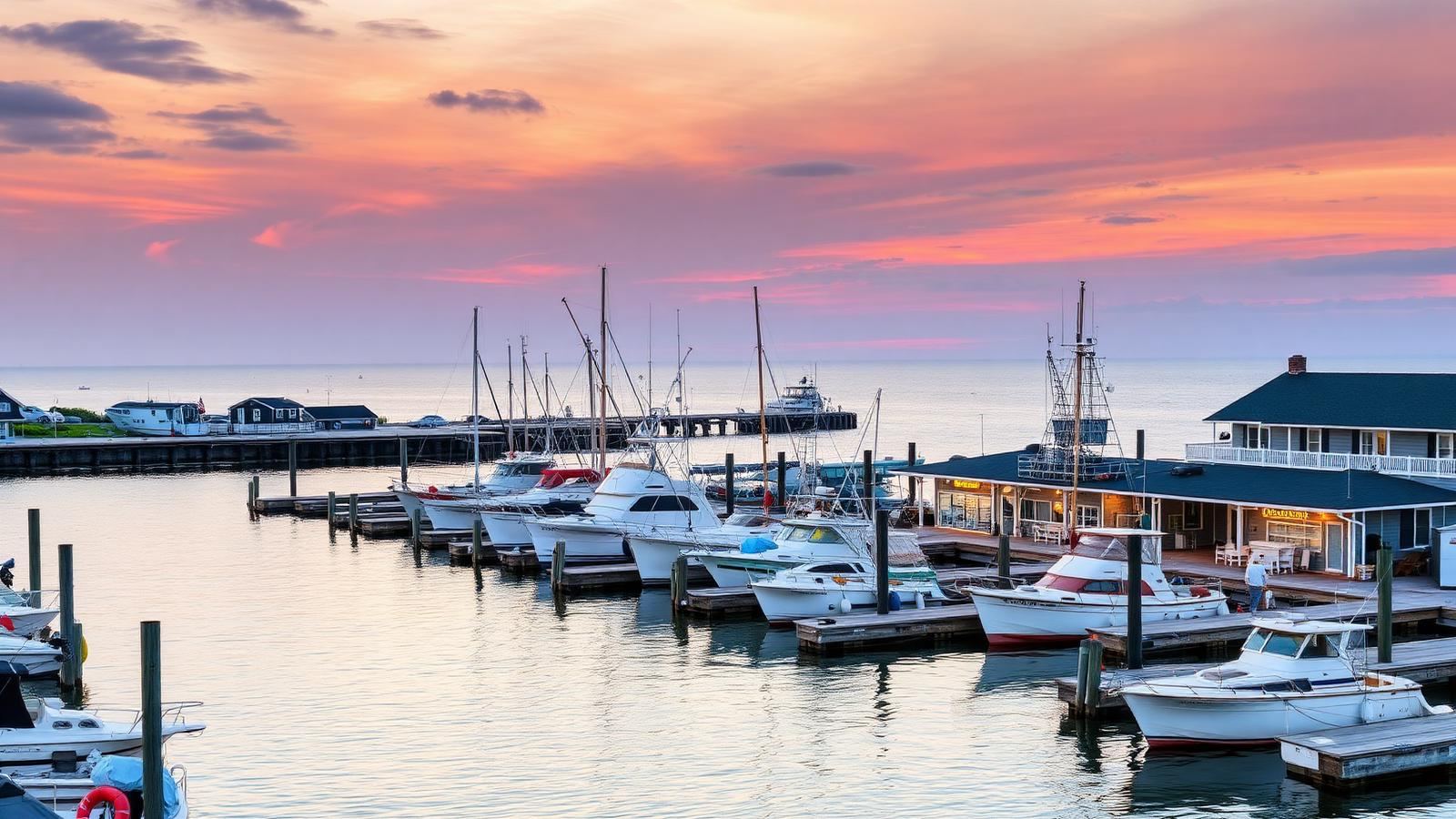
Market
Montauk Harbor & Downtown
Credential
CCIM · MBA
Focus
Seasonal Hospitality
Montauk Market Overview
Montauk is the East End's hospitality market. Its commercial inventory is dominated by motels, inns, restaurants, bars, surf and beach retail around the downtown plaza, and the working harbor at Lake Montauk — one of the largest commercial fishing and charter fleets in New York State. Value here is revenue value: keys, seats, slips, and licenses drive price more than gross building area.
Seasonality is extreme, with the majority of annual revenue earned in a short summer window. Underwriting therefore turns on RevPAR and seating capacity, staff-housing capability, license and permit transferability, and the durability of operating history through a soft season — not on a stabilized-cap-rate assumption borrowed from a year-round market.
Physical and regulatory exposure is higher than anywhere else on the East End. Coastal erosion, FEMA flood mapping, dune and bluff setbacks, NYSDEC and Army Corps jurisdiction over docks and bulkheads, and East Hampton Town's environmental review all bear directly on insurability, financeability, and reinvestment capacity. Those items belong in valuation, not in a buyer's late-stage diligence.
- Asset Mix
- Motels, restaurants, marine, seasonal retail
- Harbor
- Lake Montauk commercial & charter fleet
- Metrics
- Keys, seats, slips, licenses, RevPAR
- Risk
- Coastal erosion, FEMA, DEC & Army Corps jurisdiction
Montauk's Commercial Inventory
Montauk commercial real estate clusters around the harbor and downtown core: marina and maritime-service parcels, licensed restaurants and bars, motels and boutique lodging, retail, and service commercial. Beyond the core, developable land is scarce because of parkland, conservation easements, wetlands, and coastal-erosion districts.
The market is seasonal and event-driven. A property's value depends heavily on summer revenue intensity, permitted keys or seats, parking, and proximity to the harbor, beach, or downtown foot traffic.
Environmental and Coastal Constraints
Montauk transactions are shaped by DEC and CEHA coastal-jurisdiction rules, FEMA flood zones, erosion hazard areas, wetlands, and Suffolk County septic density. These layers determine what can be built, renovated, or operated — and they frequently add cost and timeline risk that generic underwriting misses.
We map these constraints before a property is marketed or an offer is written, so pricing reflects achievable use rather than optimistic pro formas.
Representation for Montauk Owners
Most Montauk owners prefer a confidential process. Staff, seasonal operations, and brand reputation are sensitive to sale rumors. We position assets to qualified hospitality operators, marina investors, family offices, and 1031 buyers with proof-of-funds requirements and controlled information release.
Underwriting Montauk's Seasonal Income
Montauk income arrives in roughly fourteen weeks and carries the other thirty-eight. Underwriting it properly means separating rate from occupancy, isolating weekend and event revenue, and testing what happens when a single cool, wet July compresses the season. We normalize trailing performance, apply off-season carrying costs in full, and model the labor and management intensity a compressed season demands — factors that outside lenders and out-of-market buyers consistently underestimate in both directions.
Permitted capacity sets the ceiling. Motel keys, restaurant seats, bar hours, liquor licensing, parking, and Suffolk County septic allocation are the real limits on revenue, and none of them expand simply because demand does. A harbor restaurant or downtown motel with headroom to add seats, keys, or outdoor service is a materially different asset from one already at its permitted maximum, regardless of what the trailing statements show.
Location within Montauk matters more than in any other East End market. Harbor frontage and dockage, downtown plaza foot traffic, oceanfront exposure along Old Montauk Highway, and the Napeague stretch each behave as separate submarkets with distinct tenant demand and distinct environmental exposure — DEC and coastal-erosion jurisdiction, FEMA flood elevation, and wetlands setbacks. We map those constraints and price to achievable use before an asset is quietly positioned to qualified hospitality operators, marina investors, and 1031 capital.
Local Property Insights for Montauk Owners
Montauk carries cost exposures that do not appear on a rent roll. The downtown beachfront sits behind engineered shoreline protection and inside mapped FEMA flood zones, so insurance, elevation requirements, and any substantial-improvement threshold shape what an owner can renovate before the building must be brought up to current flood standards. On the harbor, bulkhead condition, dock permits, and NYSDEC tidal-wetlands jurisdiction determine both slip income and the deferred capital an owner is carrying, and dredging cycles affect what depth of vessel a tenant can berth.
Use rights matter more here than square footage. Motel, resort, and restaurant assets operate under Town of East Hampton zoning and Suffolk County Health Department sanitary allocation, and key counts, seating, and outdoor service areas are often legally established at a number that cannot be increased. Where an operating history predates current code, confirming legal pre-existing status in the town record is part of valuation, not diligence — an unverified seat or key count is the single most common reason a Montauk price fails to survive underwriting.
Operating reality follows the season and the workforce. Revenue concentrates from late spring through the fall striped bass and charter run, staff housing is a genuine constraint on what a hospitality tenant can staff, and the commercial fishing and charter fleet at the harbor supports year-round marine-service demand that the retail core does not have. An owner deciding whether to hold, reposition, or sell needs those three curves — flood and capital exposure, permitted capacity, and seasonal labor — priced separately before a number means anything.
Buying Commercial Property in Montauk
Buyers searching for commercial property for sale in Montauk are may be underwriting an operating business alongside real estate: a motel, a restaurant, a marina, a charter operation. Revenue is compressed into a short season, so the same asset can look like a strong yield or a thin one depending entirely on how the year is annualized. Montauk is the East End market where seasonal income requires careful lender review.
Sound acquisition work here starts with the operating record rather than the asking price: occupancy and average daily rate by month, permitted key or seat count under Suffolk County Health Department limits, East Hampton Town approvals for the actual use, staff housing availability, and — at the harbor — NYSDEC jurisdiction over bulkheads, docks, and dredging. Those facts determine what the property can produce and therefore what it is worth.
Owners of Montauk hospitality and harbor assets are frequently approached opportunistically and have no independent view of value. We normalize the seasonal income, document capacity and approvals, and take the asset to qualified hospitality operators and private capital privately. Nothing is advertised, and no transaction detail is ever published.
Frequently Asked
What types of commercial property trade in Montauk?
Marina and maritime-service parcels, licensed restaurants and bars, motels and boutique lodging, downtown retail, service commercial, and limited developable land.
How does seasonality affect Montauk commercial property value?
Summer revenue intensity drives pricing. We underwrite normalized seasonal income, off-season carrying costs, and the operational demands of a compressed season rather than annualizing peak performance.
Can Montauk commercial land be developed?
Often with difficulty. Conservation easements, wetlands, CEHA, FEMA, and septic density frequently limit or prohibit development. Every site analysis begins with the environmental and entitlement path.
How is a Montauk motel or restaurant valued for purchase?
On normalized seasonal performance, not annualized peak months: occupancy and rate by month, permitted key or seat count, staff housing availability, and lease or operating structure.
What should I know before buying harbor property in Montauk?
NYSDEC jurisdiction over bulkheads, docks, and dredging governs much of the value, alongside East Hampton Town approvals for the specific use and Health Department capacity limits.
Related East End Markets
Montauk is one of several East End markets we cover. Each underwrites differently — explore the corridor that matters to your property or acquisition mandate:
- Greenport commercial real estate — harbor, marina, and Front Street village inventory.
- Hamptons commercial real estate — village retail, mixed-use, and hospitality.
- Riverhead commercial real estate — industrial, flex, and Route 58 retail.
- Mattituck commercial real estate — vineyards, farmland, and Love Lane storefronts.
- Southold commercial real estate — hamlet centers, farmland, and development rights.
- Southampton commercial real estate — village retail, multifamily, and land.
- East Hampton commercial real estate — village commercial and constrained development sites.
Start a Confidential Conversation
Kristopher J. Pilles, CCIM, MBA — 20+ years on the East End. Every inquiry is treated confidentially.
Montauk Property Inquiry
Tell us what you own or what you are looking for in Montauk. Kristopher J. Pilles, CCIM, MBA responds personally. Every inquiry is handled confidentially — we do not publicize listings, sales, or client names.