East Hampton, New York
East Hampton Commercial Real Estate
East Hampton Village combines one of the most tightly held commercial cores in the Hamptons with a global buyer pool and a seasonal economy that compresses a year's revenue into a few intense months. North Fork Commercial advises East Hampton owners, buyers, and capital partners on valuation, off-market positioning, and closing-certain execution.
- Main Street
- Newtown Lane
- Montauk Highway
- Wainscott
- Amagansett
Market
East Hampton Village
Credential
CCIM · MBA
Experience
20+ Years East End
East Hampton Market Overview
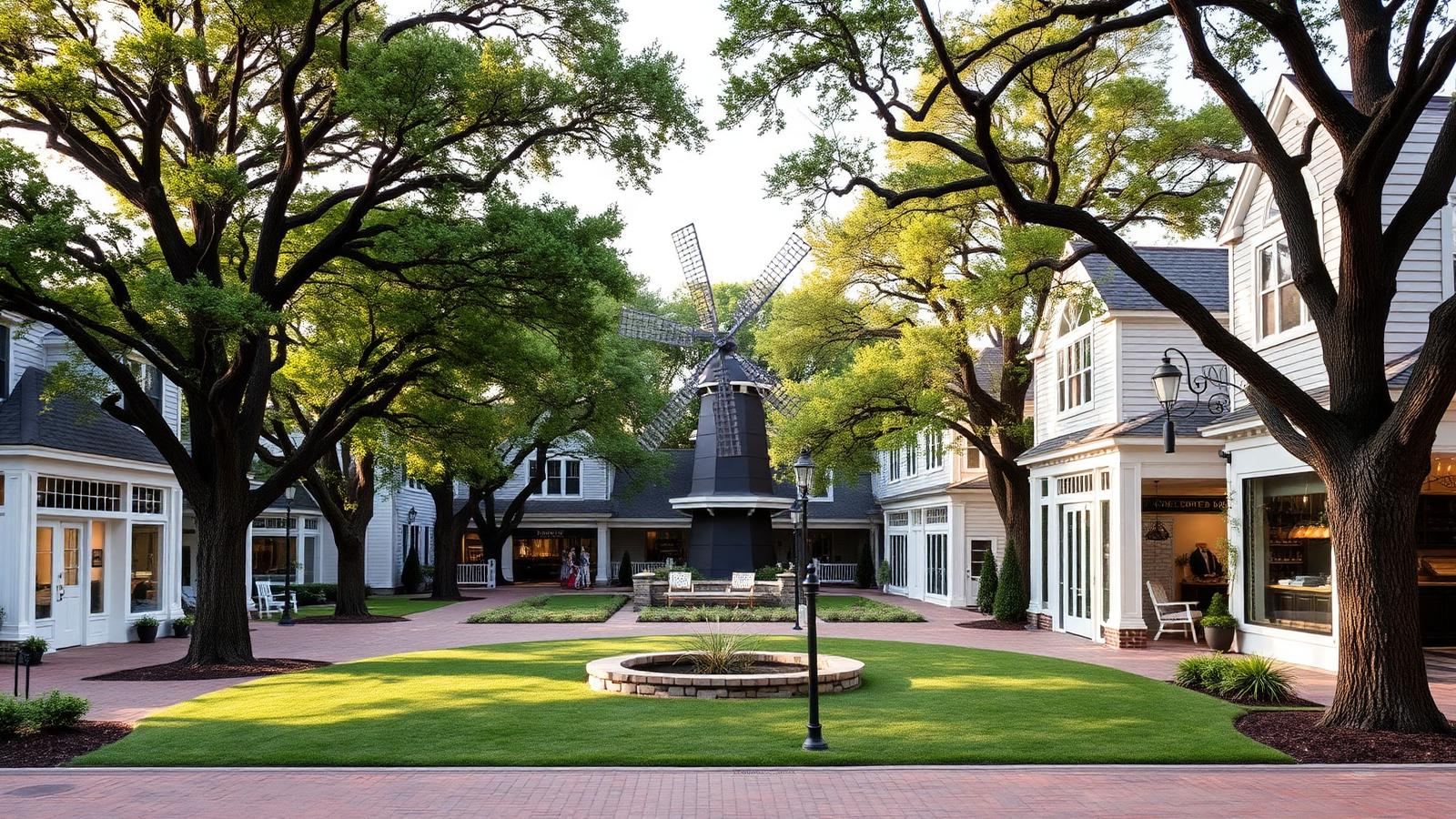
East Hampton Village's commercial core is small, historic, and deliberately constrained: Main Street and Newtown Lane, plus the immediately adjacent blocks. Supply is effectively fixed, so the market behaves like a scarcity market — vacancy is short-lived at the top of the street, rents reset sharply on renewal, and buildings often trade on the strength of a single lease and the quality of the address rather than on square footage.
Outside the village, the Montauk Highway corridor through Wainscott and Amagansett carries service, contractor, storage, and larger-format uses, along with the town's limited industrial-zoned land near the airport. That corridor is where most of the town's usable commercial acreage actually sits, and where entitlement work has the highest payoff.
Review is the defining risk. Village design and historic review, East Hampton Town's environmental standards, Suffolk County septic capacity, and strict formula-business and signage sentiment all shape what a buyer can do post-closing. Owners here are highly discretion-sensitive: most transactions are placed quietly to a short, pre-qualified buyer list.
- Core
- Main Street & Newtown Lane
- Corridor
- Montauk Highway, Wainscott to Amagansett
- Pricing Logic
- Fixed supply, address-driven scarcity
- Constraints
- Village design review, septic, environmental standards
The East Hampton Commercial Core
Newtown Lane and Main Street form the heart of East Hampton's commercial market: high-end retail, galleries, licensed restaurants, boutique inns, and mixed-use buildings with residential above. Supply is constrained by village zoning, historic preservation, and the simple fact that the core is built out. Amagansett and Wainscott offer smaller, corridor-style commercial opportunities with different seasonal and year-round dynamics.
Pricing reflects scarcity and brand value as much as NOI. The correct underwriting reconciles in-place income, land value, tenant credit, lease structure, and the seasonal revenue concentration that defines the market.
Entitlements, Zoning, and Village Review
East Hampton Town and Village zoning, architectural and historic review, Suffolk County septic density, and environmental overlays govern what can operate, expand, or convert. Restaurant seating, hotel keys, and upper-floor residential are all capped by practical capacity limits that are not visible on a tax map.
We underwrite the approval path as part of the asset. A property priced without understanding its achievable use is mispriced.
How East Hampton Owners Are Represented
Discretion is essential. Public listings can disrupt tenants, staff, and seasonal operations. We position East Hampton assets to a qualified buyer set — family offices, legacy acquirers, hospitality operators, and 1031 buyers — and require proof of funds or a binding lender term sheet before sensitive information is released.
East Hampton Submarkets and Pricing Behavior
East Hampton is several small markets that price independently. The Main Street and Newtown Lane village core holds the scarcest inventory — galleries, boutique retail, licensed restaurants, and professional office — where tenancy quality and pedestrian position drive value and buildings trade on scarcity rather than cap-rate math. Amagansett is smaller-scale and seasonally sharper. Wainscott carries the highway-service, showroom, and light-industrial inventory that supports the rest of the town, and it is where most larger-footprint requirements are actually satisfied.
Hospitality and food-and-beverage assets are valued on permitted capacity as much as on revenue. Seats, keys, hours, liquor licensing, and septic allocation determine the ceiling on income, and those limits are fixed by Suffolk County and village approvals rather than by demand. A restaurant generating strong summer numbers with no path to added capacity is a different asset than one with headroom, even at the same trailing NOI.
Land and redevelopment sites carry the town's heaviest review burden: architectural and historic review, wetlands and groundwater overlays, clearing limits, and community preservation considerations. Timeline risk is a real cost here, and we quantify it during valuation. Owners are typically long-term holders, so most meaningful transactions begin privately — positioned to family offices, legacy acquirers, and established hospitality operators with verified capacity before any information is released.
Local Property Insights for East Hampton Owners
East Hampton splits into distinct ownership problems. Inside the Village, Main Street and Newtown Lane buildings sit under design review and a fixed commercial footprint, so improvements are governed as much by appearance and historic character as by code, and timelines extend accordingly. Outside the Village, the Wainscott and Montauk Highway commercial corridors hold the service, contractor-yard, and larger-format inventory, where public water extension, groundwater quality history, and permitted outdoor storage determine whether a use is transferable to a buyer at all.
Two town-wide forces sit underneath every valuation. The Peconic Bay Region Community Preservation Fund transfer tax applies at closing and the Town's preservation program continues to remove developable land from supply, which tightens inventory and supports basis on what remains. At the same time, sanitary allocation from the Suffolk County Department of Health Services — not floor area — sets restaurant seating and any residential component, so an owner's real capacity question is how much flow the parcel is credited with and whether that credit is documented.
For a hold-or-sell decision, the numbers that move value are lease structure and permitted use rather than headline rent. Village retail leases commonly pass through taxes and insurance and are read on effective rent net of concessions and shoulder-season vacancy; corridor properties are read on yard area, ceiling height, and whether a contractor or service tenant can legally operate. We establish both, in writing, before positioning an East Hampton asset to a buyer set that already underwrites this town.
Buying Commercial Property in East Hampton
The supply of commercial property for sale in East Hampton is structurally tiny. Newtown Lane and Main Street sit inside an incorporated village with historic-district oversight, strict architectural and signage review, and parking requirements that make intensification difficult; Wainscott and Amagansett add service, storage, and light-industrial uses that almost never change hands publicly. Price should reflect property-specific evidence, permitted use, and operating assumptions.
That makes the buyer's brief unusually important. Licensed hospitality, food service, and any change of use trigger both a parking analysis and Suffolk County Health Department sanitary review, and approval timelines can outlast a financing commitment. We confirm what the village will permit, what the septic capacity supports, and what the realistic approval calendar looks like before a number is put in front of an owner.
For owners, an East Hampton building with a long-tenured tenant and legacy rent is frequently worth materially more than the in-place income suggests. We value it against permitted use and replacement scarcity rather than a cap-rate screen, then approach a curated set of operators and private capital directly, in confidence.
Frequently Asked
What commercial property is available in East Hampton?
Village-core retail, galleries, licensed restaurants, boutique lodging, mixed-use, professional office, and select highway service commercial in Amagansett, Wainscott, and surrounding hamlets.
How does seasonality affect East Hampton commercial valuation?
Revenue is heavily concentrated between Memorial Day and Columbus Day. We normalize seasonal income, stress-test winter performance, and underwrite tenant credit and lease structure rather than annualizing peak months.
Are East Hampton commercial properties publicly listed?
The best assets typically trade off-market. We represent owners confidentially unless broader exposure is specifically requested.
Can I buy commercial property in East Hampton Village?
An acquisition depends on suitable property and an owner willing to engage. Historic-district review, signage rules, and parking requirements shape what any building can become, so the permitted use should be confirmed before price.
What does a restaurant or retail change of use require in East Hampton?
A parking analysis and Suffolk County Health Department sanitary review, plus village approvals. The timeline can exceed a financing commitment, which is why we establish it before an offer.
Related East End Markets
East Hampton is one of several East End markets we cover. Each underwrites differently — explore the corridor that matters to your property or acquisition mandate:
- Greenport commercial real estate — harbor, marina, and Front Street village inventory.
- Hamptons commercial real estate — village retail, mixed-use, and hospitality.
- Riverhead commercial real estate — industrial, flex, and Route 58 retail.
- Mattituck commercial real estate — vineyards, farmland, and Love Lane storefronts.
- Southold commercial real estate — hamlet centers, farmland, and development rights.
- Southampton commercial real estate — village retail, multifamily, and land.
- Montauk commercial real estate — marina, lodging, and downtown retail.
Start a Confidential Conversation
Kristopher J. Pilles, CCIM, MBA — 20+ years on the East End. Every inquiry is treated confidentially.
East Hampton Property Inquiry
Tell us what you own or what you are looking for in East Hampton. Kristopher J. Pilles, CCIM, MBA responds personally. Every inquiry is handled confidentially — we do not publicize listings, sales, or client names.