The Hamptons
Hamptons Commercial Real Estate
The Hamptons commercial market is a seasonal, supply-constrained, high-basis market that behaves unlike any other in New York. North Fork Commercial advises Hamptons owners, buyers, and capital partners across Southampton, Bridgehampton, Water Mill, East Hampton, Amagansett, Wainscott, Westhampton Beach, and Montauk with institutional underwriting and complete discretion.
- Southampton Village
- Bridgehampton
- East Hampton
- Sag Harbor
- Amagansett
- Montauk
Coverage
Southampton to Montauk
Credential
CCIM · MBA
Experience
20+ Years East End
Hamptons Commercial Market Overview
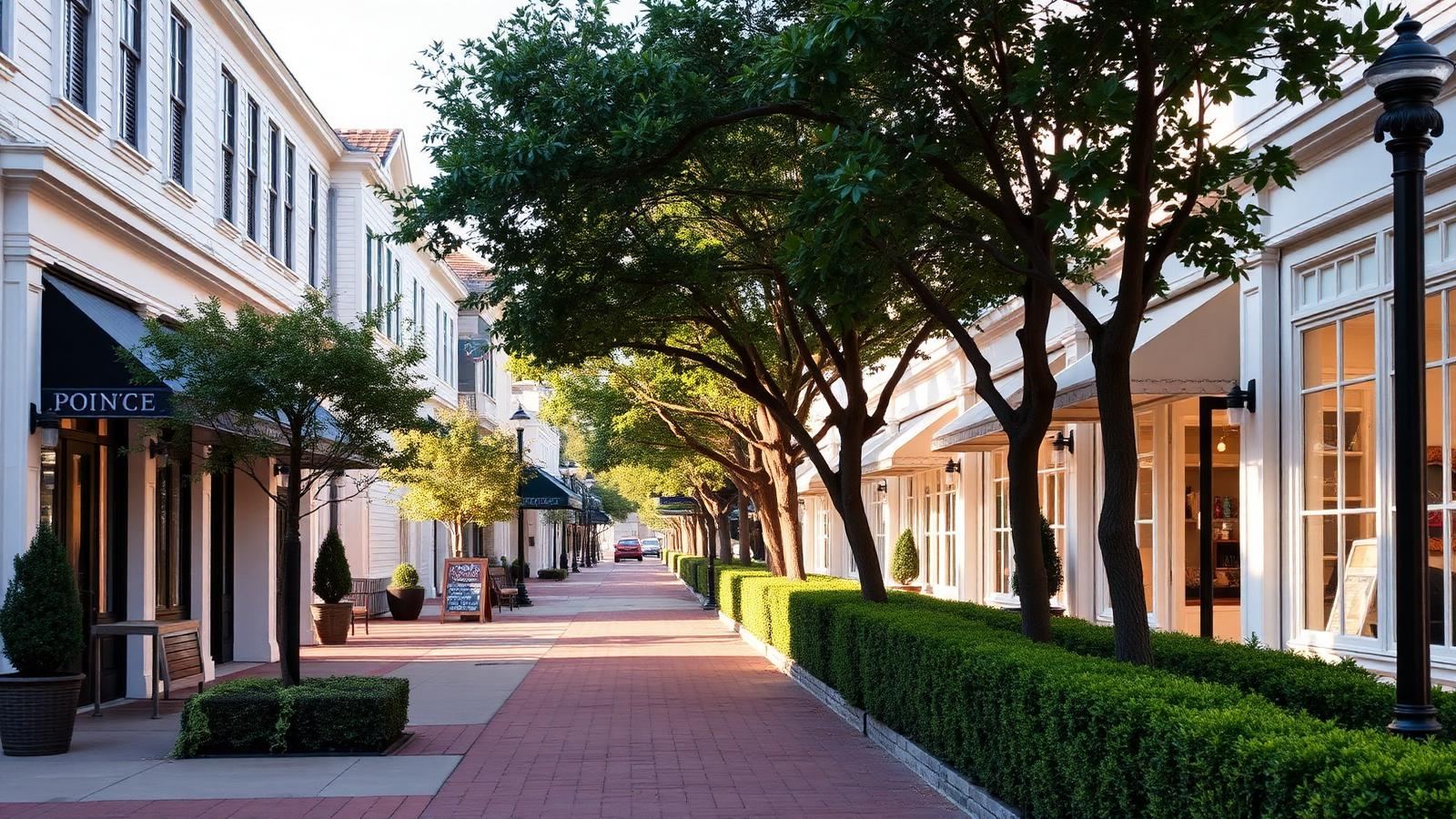
The Hamptons is not one commercial market but a chain of village cores strung along Montauk Highway, each with its own zoning board, its own tenant profile, and its own seasonal curve. Southampton Village and East Hampton Village anchor the highest-rent retail; Bridgehampton and Wainscott carry the larger-format and service inventory; Sag Harbor trades on waterfront and walkability; Montauk trades on hospitality. A rent comparable pulled from the wrong village is not a comparable.
Revenue here is concentrated into roughly Memorial Day through Columbus Day, so leases, valuations, and debt structures are all shaped by seasonality. Percentage rent, seasonal subleases, and shoulder-season vacancy are normal features rather than red flags — but they must be normalized before an NOI is trustworthy. Lenders underwriting from outside the region routinely misread that pattern in both directions.
Buyers are predominantly private: family offices, established operators, and 1031 capital, most of whom already own on the East End. That buyer set responds to discretion and to complete underwriting, which is why some owners choose private outreach rather than broad public promotion.
- Geography
- Southampton Village to Montauk Point
- Season
- Memorial Day through Columbus Day peak
- Jurisdictions
- Southampton & East Hampton Towns plus incorporated villages
- Buyer Profile
- Family offices, operators, 1031 capital
Why Hamptons Commercial Assets Underwrite Differently
Hamptons commercial revenue is concentrated into a short, intense season. A retail tenant, restaurant, or hotel may generate the majority of annual income between Memorial Day and Columbus Day, which changes how lease structures, percentage rent, and coverage ratios should be read. Lenders discount seasonal concentration; buyers who underwrite it correctly find value where generic cap-rate screens do not.
Basis is the second differentiator. Land value in the village cores of Southampton and East Hampton frequently exceeds the income value of what stands on it, which makes highest-and-best-use analysis — not in-place NOI — the correct starting point for many trades. We underwrite both and reconcile them.
Asset Classes We Cover Across the Hamptons
Job's Lane, Main Street, and Newtown Lane retail and mixed-use; licensed restaurants and hospitality including boutique hotels and inns; highway commercial and service-industrial along County Road 39 and the Wainscott corridor; marina and waterfront commercial; multifamily and workforce-housing income property; professional and medical office; and development or redevelopment land where entitlement work drives the return.
Trophy and licensed assets in these markets are rarely publicly marketed. Access is a function of relationships and credibility with owners, not of listing platform coverage.
Zoning, Septic, and Environmental Reality
Hamptons transactions turn on Suffolk County Department of Health septic density, village and town zoning overlays, architectural and historic review, wetlands and CEHA jurisdiction, FEMA flood exposure, and Community Preservation Fund pressure on developable land. Every one of these can add months to a timeline or eliminate a use entirely.
We map constraints and approval paths before a property goes to market or an offer is written, so pricing reflects what is actually achievable rather than what a pro forma assumes.
Confidential Representation for Hamptons Owners
Hamptons ownership is often multigenerational, entity-held, or tied to family offices and legacy acquisitions where publicity is unwelcome. Our default is a confidential process: underwriting-grade valuation, a curated buyer set, mandatory financial qualification, and controlled release of sensitive information.
Village-by-Village Pricing Across the Hamptons
A Hamptons valuation is only credible at the village level. Southampton Village and East Hampton Village hold the highest-rent retail, where storefront frontage and pedestrian position matter more than total area. Bridgehampton and Wainscott carry the larger-format, showroom, and service inventory that the rest of the region depends on. Sag Harbor prices on waterfront and walkability, Amagansett on small-scale seasonal retail, and Montauk on hospitality and harbor exposure. A rent comparable pulled from the wrong village produces a number, not a value.
Every one of those submarkets is governed separately. Southampton Town, East Hampton Town, and the incorporated villages each maintain their own zoning, architectural and historic review, and parking requirements, layered over Suffolk County septic density and, near the water, NYSDEC and FEMA jurisdiction. Restaurant seats, hotel keys, and upper-floor apartments are capped by those approvals rather than by demand, which is why intensification assumptions need to be verified before they are priced.
Capital behaves consistently across the region even when pricing does not. Buyers are overwhelmingly private — family offices, established local operators, and 1031 exchange capital, most of whom already own on the East End — and they respond to discretion and complete underwriting rather than to public marketing. We normalize seasonal income, document tenant credit and lease structure, confirm the approval path, and then position each asset to the specific buyer set that transacts in that village.
Buying and Selling Hamptons Commercial Property
A search for commercial property for sale in the Hamptons returns village-by-village fragments, because that is how the market actually behaves. Southampton Village retail, Bridgehampton service and larger-format space, Sag Harbor waterfront, Wainscott industrial, and Montauk hospitality are separate competitive sets with separate zoning boards. Buyers who treat them as one market pay a Southampton price for a Wainscott asset, or dismiss a Sag Harbor building because a Bridgehampton comparable looked cheaper.
Some owners and buyers choose private outreach for a South Fork transaction. For an acquirer, that means the realistic path is a defined mandate — asset type, village, income requirement, timeline, capital structure — introduced directly to owners rather than a monitoring exercise on public inventory.
For a seller, the same privacy is the point. We underwrite the asset on normalized seasonal income, document approvals and capacity, and approach a curated buyer set under confidentiality. Financials are released in stages, unnecessary exposure is limited where possible, subject to legal disclosure and third-party conduct.
Frequently Asked
Which Hamptons markets do you cover?
Southampton, Bridgehampton, Water Mill, Hampton Bays, Westhampton Beach, Wainscott, East Hampton, Amagansett, Montauk, and Shelter Island, alongside the full North Fork.
How does seasonality affect Hamptons commercial valuation?
Revenue concentration in a short season affects lease structure, tenant credit, lender coverage requirements, and cap-rate selection. We normalize seasonal income and stress-test it rather than annualizing peak performance.
Are the best Hamptons commercial properties publicly listed?
Frequently not. Licensed hospitality, waterfront, and trophy retail typically trade off-market through direct owner relationships.
Where do I find Hamptons commercial property for sale?
Most of it is not advertised. Buyers with a defined mandate — village, asset type, income requirement, timeline — are introduced to owners privately, which is how the majority of South Fork commercial transactions are arranged.
Which Hamptons village should I buy in?
It depends on the use. Southampton and East Hampton Villages for high-rent retail, Bridgehampton and Wainscott for service and larger-format space, Sag Harbor for waterfront and walkability, Montauk for hospitality.
Related East End Markets
The Hamptons is one of several East End markets we cover. Each underwrites differently — explore the corridor that matters to your property or acquisition mandate:
- Greenport commercial real estate — harbor, marina, and Front Street village inventory.
- Riverhead commercial real estate — industrial, flex, and Route 58 retail.
- Mattituck commercial real estate — vineyards, farmland, and Love Lane storefronts.
- Southold commercial real estate — hamlet centers, farmland, and development rights.
- Southampton commercial real estate — village retail, multifamily, and land.
- East Hampton commercial real estate — village commercial and constrained development sites.
- Montauk commercial real estate — marina, lodging, and downtown retail.
Start a Confidential Conversation
Kristopher J. Pilles, CCIM, MBA — 20+ years on the East End. Every inquiry is treated confidentially.
The Hamptons Property Inquiry
Tell us what you own or what you are looking for in The Hamptons. Kristopher J. Pilles, CCIM, MBA responds personally. Every inquiry is handled confidentially — we do not publicize listings, sales, or client names.