Sag Harbor, New York
Sag Harbor Commercial Real Estate
Sag Harbor's commercial core is small, historic, and split across two town jurisdictions, which makes underwriting and zoning review unusually specific to the parcel. North Fork Commercial advises owners and legacy acquirers on Main Street, Long Wharf, and Bay Street property with the discretion this walkable village market demands.
- Main Street
- Long Wharf
- Bay Street
- Division Street
- Route 114
Credential
CCIM · MBA
Jurisdiction
Southampton & East Hampton Towns
Posture
Off-Market First
Sag Harbor Market Overview
Ownership of Sag Harbor's commercial buildings skews toward long-held family entities and small partnerships, many holding property that predates the village's current historic district review process. Turnover is infrequent, and much of what does trade never reaches a public listing platform because owners prefer to gauge interest quietly before committing to a marketing process.
Buyers are typically legacy acquirers and family offices drawn to the combination of walkable retail frontage, marina and waterfront access, and a village identity that has held its character for generations. 1031 exchange capital is common, as is interest from operators who already hold restaurant or retail concepts elsewhere on the East End and want a Sag Harbor address specifically.
Pricing is shaped less by a single cap rate and more by permitted use, historic district constraints on signage and facade alteration, and proximity to Long Wharf. A building with unresolved certificate-of-occupancy history or an unresolved second-floor use question underwrites very differently than one with a clean use record, even on the same block.
- Village Straddles
- Southampton & East Hampton Towns
- Core Corridor
- Main Street to Long Wharf
- Review Body
- Historic Preservation & Architectural Review Board
- Season
- Memorial Day–Columbus Day peak
Main Street, Long Wharf, and the Working Waterfront
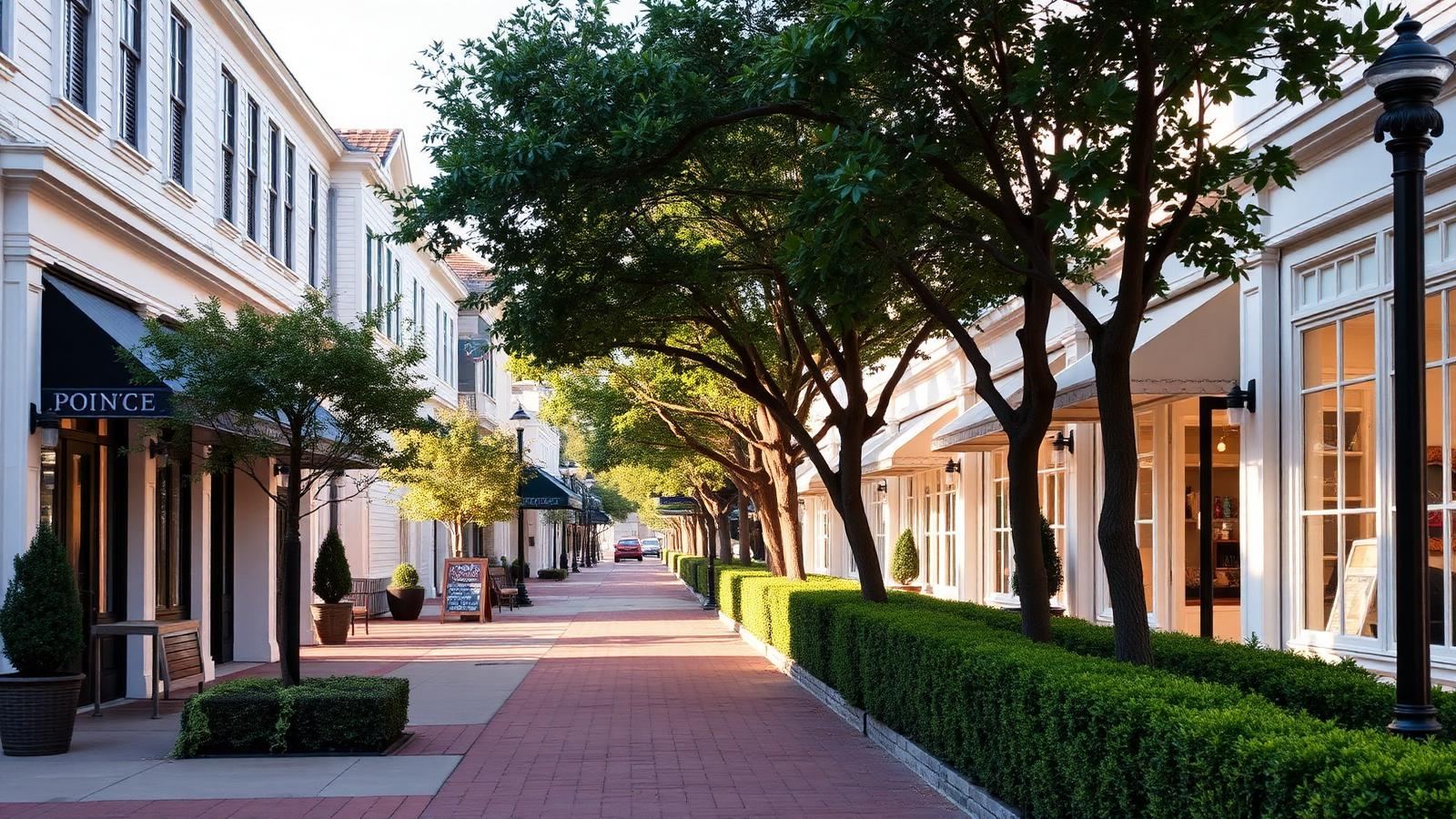
Sag Harbor's commercial inventory concentrates along Main Street between the windmill and Long Wharf, with a secondary node on Division Street and scattered mixed-use buildings along Route 114 as it enters the village. Ground-floor retail and food and beverage dominate, frequently paired with second-floor office or residential space that carries its own certificate-of-occupancy history.
Long Wharf and the Bay Street waterfront add a marina and slip-holding dimension that most Hamptons villages do not have at their commercial core, and Wharf Shop-era buildings sit within feet of transient docking. Inventory here rarely sits vacant for long once it becomes available, which is part of why most transactions never see a public listing.
Historic District Review and the Village's Split Jurisdiction
Because the Village of Sag Harbor sits across the Southampton and East Hampton Town line, an owner's parcel can be subject to different underlying zoning depending on which side of the historic boundary it falls on, even where the street frontage looks continuous. Any exterior alteration, signage change, or addition within the historic district requires review by the village's architectural review board, and that review timeline needs to be underwritten into a renovation or repositioning plan, not treated as a formality.
Suffolk County Health Department septic capacity is a real constraint on second-floor apartment conversions and restaurant seat counts in the older building stock, much of which predates current sanitary code. FEMA flood mapping near Long Wharf and the harbor edge affects insurance costs and, in some cases, permitted first-floor use, and any waterfront work triggers NYSDEC and wetlands review before it triggers a village permit.
Confidential Representation for Sag Harbor Owners
Owners of Sag Harbor commercial buildings are typically better served by a quiet, qualified-buyer process than a public listing, given how small and interconnected the merchant and ownership community is. North Fork Commercial runs valuation, buyer qualification, and negotiation confidentially, often reaching family offices and legacy acquirers who were never going to respond to a portal listing in the first place.
This is particularly relevant for mixed-use buildings with a residential upper floor, where a public listing can create tenant disruption before a sale is even confirmed. Confidential marketing lets ownership control the timeline and the narrative around the building's use history.
How Sag Harbor Property Actually Prices
Valuation starts with permitted use and certificate-of-occupancy history rather than a comparable-sale average, because two similar-looking Main Street buildings can carry very different legal seat counts, apartment counts, or retail-versus-restaurant designations. Seasonal income needs to be normalized against a full year, not annualized off a July and August run rate, since much of Sag Harbor's retail and restaurant revenue concentrates in the Memorial Day to Columbus Day window.
Parking is scarce and largely municipal, so a buyer's underwriting has to account for how a given use interacts with village parking policy rather than assuming on-site parking exists. Timeline risk from architectural review, health department approval for any seating or apartment change, and the split-town jurisdiction question all need to be priced into a deal before it is signed, not discovered during due diligence.
Frequently Asked
Does North Fork Commercial publicly list Sag Harbor commercial properties?
No. Sag Harbor's ownership and merchant community is small and closely networked, and public listings can disrupt tenants and pricing leverage. Engagements are handled confidentially, with buyer qualification and terms discussed directly rather than through a public platform.
Why does it matter which town a Sag Harbor property sits in?
The Village of Sag Harbor spans both the Town of Southampton and the Town of East Hampton, and the underlying zoning, historic review procedure, and permitted use can differ depending on which side of that line a parcel falls, which affects both use and valuation.
How does the historic district affect a renovation timeline?
Any exterior change, signage, or addition within the historic district requires architectural review board approval before a building permit is issued, and that review adds a timeline that needs to be underwritten into any repositioning plan.
Related East End Markets
Sag Harbor is one of several East End markets we cover. Each underwrites differently — explore the corridor that matters to your property or acquisition mandate:
- Greenport commercial real estate — harbor, marina, and Front Street village inventory.
- Hamptons commercial real estate — village retail, mixed-use, and hospitality.
- Riverhead commercial real estate — industrial, flex, and Route 58 retail.
- Mattituck commercial real estate — vineyards, farmland, and Love Lane storefronts.
- Southold commercial real estate — hamlet centers, farmland, and development rights.
- Southampton commercial real estate — village retail, multifamily, and land.
- East Hampton commercial real estate — village commercial and constrained development sites.
- Montauk commercial real estate — marina, lodging, and downtown retail.
Start a Confidential Conversation
Kristopher J. Pilles, CCIM, MBA — 20+ years on the East End. Every inquiry is treated confidentially.
Sag Harbor Property Inquiry
Tell us what you own or what you are looking for in Sag Harbor. Kristopher J. Pilles, CCIM, MBA responds personally. Every inquiry is handled confidentially — we do not publicize listings, sales, or client names.